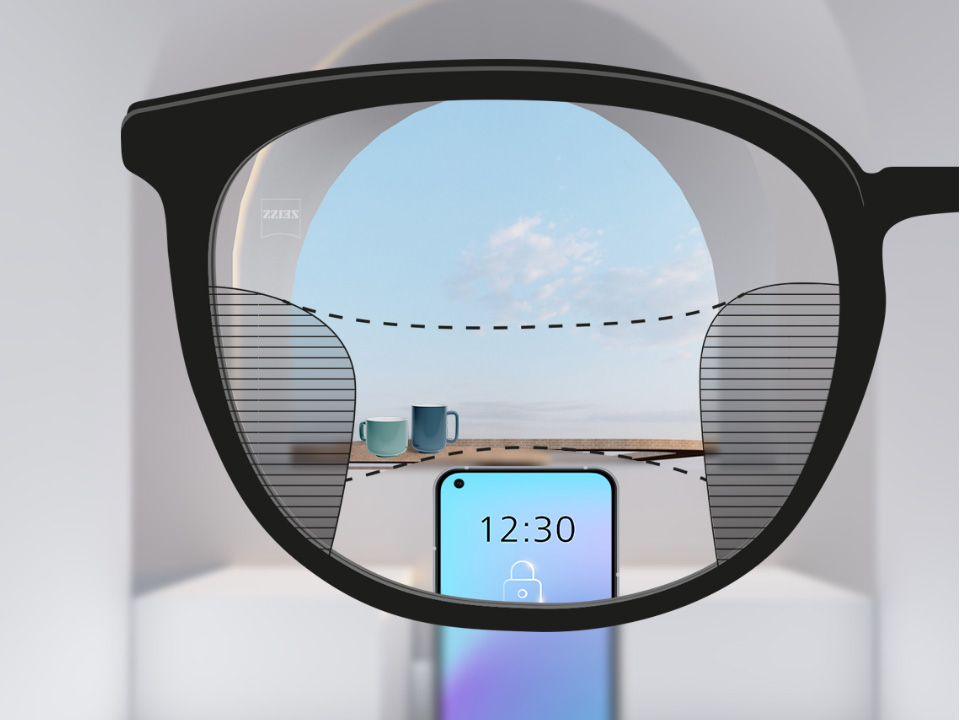
Varifocals, also called progressive lenses, combine distance, intermediate and near vision in one lens without a visible dividing line. The prescription changes gradually through a progression corridor, connecting the viewing areas rather than separating them into distinct segments. They can reduce the need to swap between distance and reading glasses. A progressive design is not equally clear at every point across the lens: the viewing zones and areas of peripheral blur vary with the design.
Understanding changing near vision
Presbyopia is the normal age-related change that makes it harder to focus on close objects. You may find yourself holding a book farther away or needing a different correction for reading than for distance. Varifocals are one option when both corrections are needed. Your prescription and lens choice should follow an eye examination and an individual discussion of your visual tasks. Not everyone with changing near vision will need the same type of glasses or the same progressive design.
How the viewing zones work
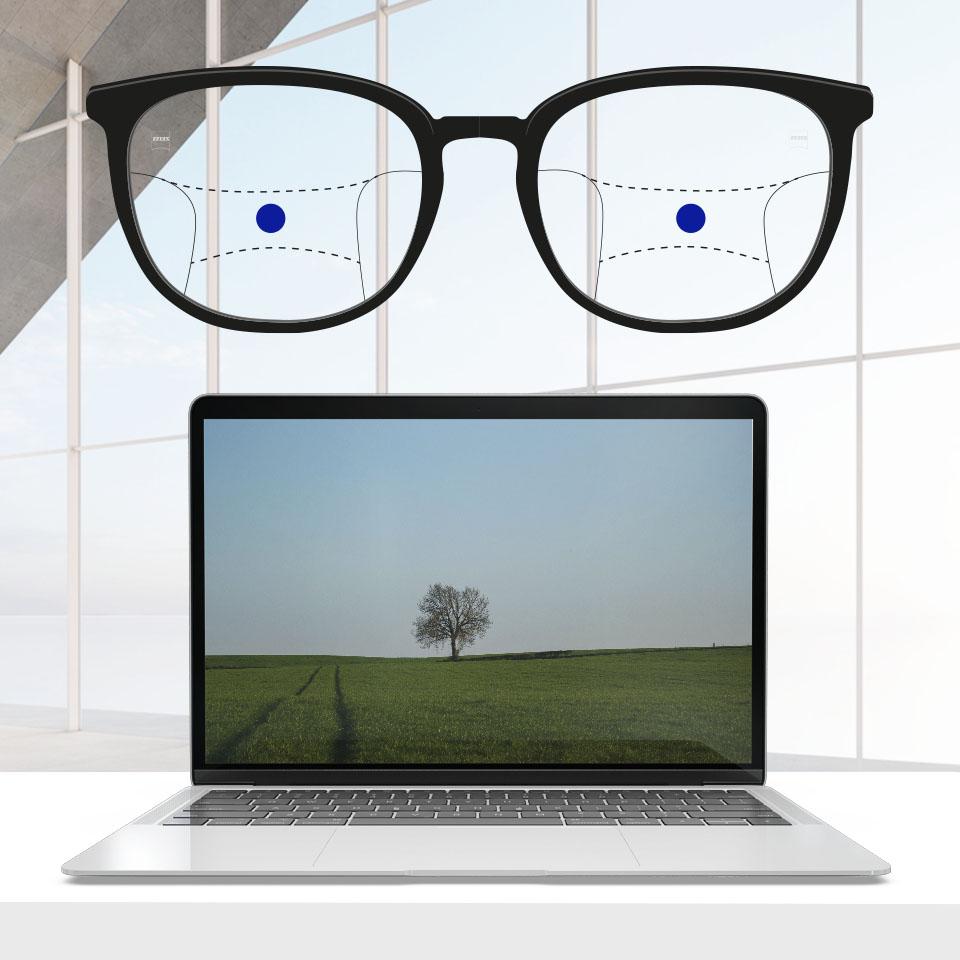
The upper part of a typical varifocal is used for distance vision. The intermediate area below it supports tasks such as looking at a screen, while the lower area is used for reading and closer work. You learn to use the appropriate part of the lens by changing your gaze and head position. The width and balance of the zones differ between designs. Discuss the distances that matter most to you so the lens choice reflects your routine rather than only your prescription.
The intermediate viewing area for computer-distance tasks · Image: ZEISS
ZEISS SmartLife Progressive
ZEISS presents SmartLife Progressive as a range designed for mature eyes and connected, on-the-move lifestyles. Its design approach draws on research into visual behaviour, including eye and head movements between near, intermediate and distance targets. ZEISS describes optimised viewing zones and transitions towards the lens periphery. These are design aims, not a promise that every wearer will experience the same outcome. The range includes personalisation options that our team can explain in relation to your needs.
Individualisation and design levels
ZEISS’s professional portfolio includes different progressive design levels, including SmartLife Pure, Plus, Superb and Individual 3, as well as other ranges such as ClearMind and DriveSafe. Some designs use additional fitting information and personalisation to tailor the lens more closely to the wearer. A product name is not a universal recommendation: the appropriate choice depends on prescription, visual priorities, frame and the information available for dispensing. We will confirm which manufacturer options and combinations are available through i2i.
Why frame choice and measurements matter
A varifocal needs sufficient space for its viewing zones and a frame that stays in its intended position. Our team checks and adjusts your chosen frame before measuring. For every pair of glasses purchased, we measure your pupillary distance, fitting heights and other key measurements using our state-of-the-art ZEISS VISUFIT dispensing technology. We consider the relationship between your eyes, face, frame and lenses, then check the finished glasses on you. VISUFIT measurement is free at i2i Optometrists, Howard Street.
Getting comfortable with new varifocals
A new prescription or progressive design can take time to get used to. Finding the distance, intermediate and reading areas, and moving your head towards what you want to see, may feel unfamiliar at first. ZEISS describes technologies intended to support adaptation, but familiarisation varies between wearers and cannot be guaranteed from day one. Follow the advice given at dispensing. If vision or comfort remains problematic, contact our team so we can check the prescription, frame position and fitting rather than asking you simply to persevere.
Everyday varifocals and office lenses
General-purpose varifocals cover distance, intermediate and near tasks in one pair. ZEISS Office lenses are a different category, designed around near-to-intermediate working distances. They may be worth discussing for prolonged desk or screen work, where the balance of viewing areas can be different from everyday needs. They are not automatically a replacement for distance glasses or suitable for driving. Bring details of your screen position and work environment so we can discuss the appropriate type of lens.
Choosing lenses for your day
Consider reading, screens, conversations, mobility, driving and hobbies when discussing varifocals. Some people prioritise one everyday pair, while others find a separate task-specific pair useful for sustained work at a particular distance. Materials, anti-reflection coatings, light-reactive options and prescription sun lenses can also form part of the discussion. Not every combination is suitable for every prescription or frame. Our dispensing team will explain the relevant choices and their limitations, without promising perfect vision or an identical adaptation experience for everyone.
Based on official ZEISS information reviewed on 7 November 2026. The manufacturer’s range does not confirm local availability; ask our team about suitable products, combinations and current specifications.